One destination
The O2 Arena is one of the most iconic music venues in the world. But that was part of the problem.It was famous for concerts — yet under the roof of that vast dome lived far more: restaurants, bars, bowling, cinema, sport, retail, and immersive experiences. The physical space was dynamic and layered. The brand wasn’t.
The ambition was clear: create a digital presence that seamlessly connects all of The O2’s unique offerings under one iconic identity. Not just a venue. A destination.
Starting with people, not pixels
We approached the challenge through Human-Centered Design, grounding every decision in how visitors actually experience The O2.
Through interviews, surveys, and behavioural testing, we explored how people planned visits, navigated the space, and talked about the venue. What emerged was revealing: audiences often came for one thing and left discovering something else. The physical experience was serendipitous and circular. The digital one was fragmented and linear. That disconnect became the opportunity. The O2 didn’t need more content. It needed cohesion.
Designing from the architecture outward
The breakthrough came from looking at the building itself. The arena’s circular form — a central stage surrounded by layers of activity — became the organising principle for the brand and digital system. We translated the physical layout into a visual and structural language online. Pathways mirrored movement. Zones echoed visitor journeys. The experience felt immersive rather than transactional.
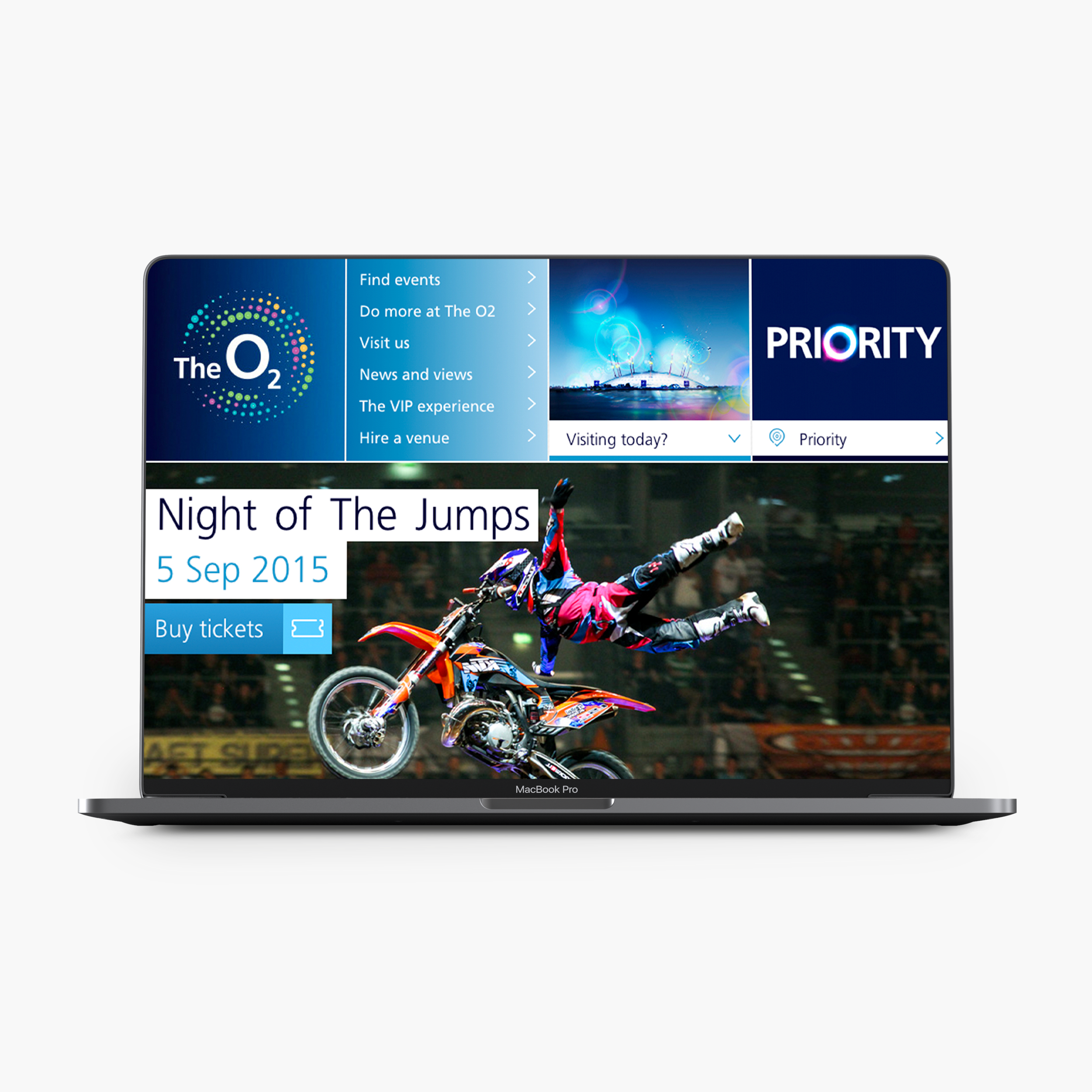
The identity was refreshed to feel confident and expansive — expressive enough to hold music, sport, dining, film, and nightlife without fragmentation. Instead of siloing experiences, we connected them through a unified design system that worked across every touchpoint.
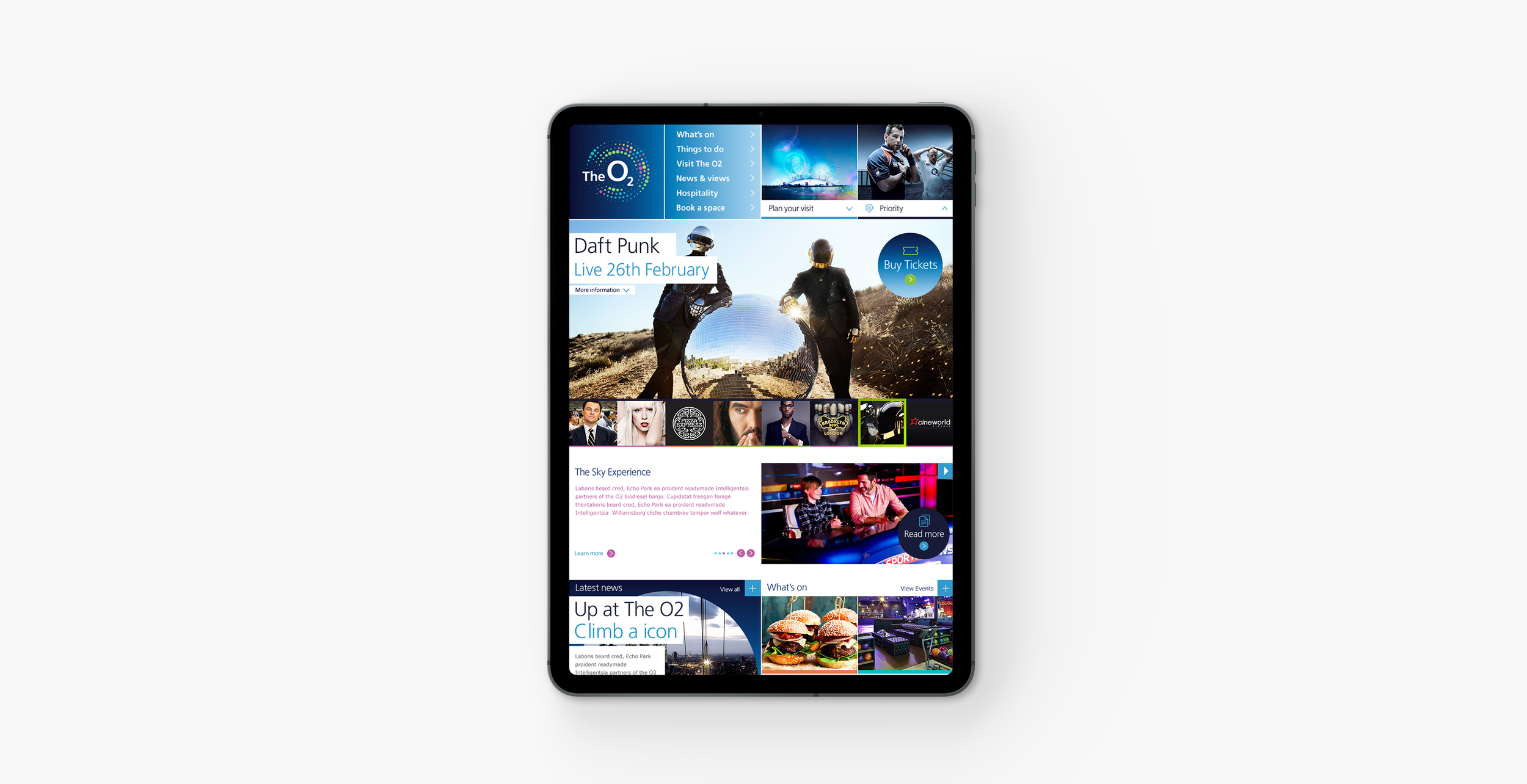
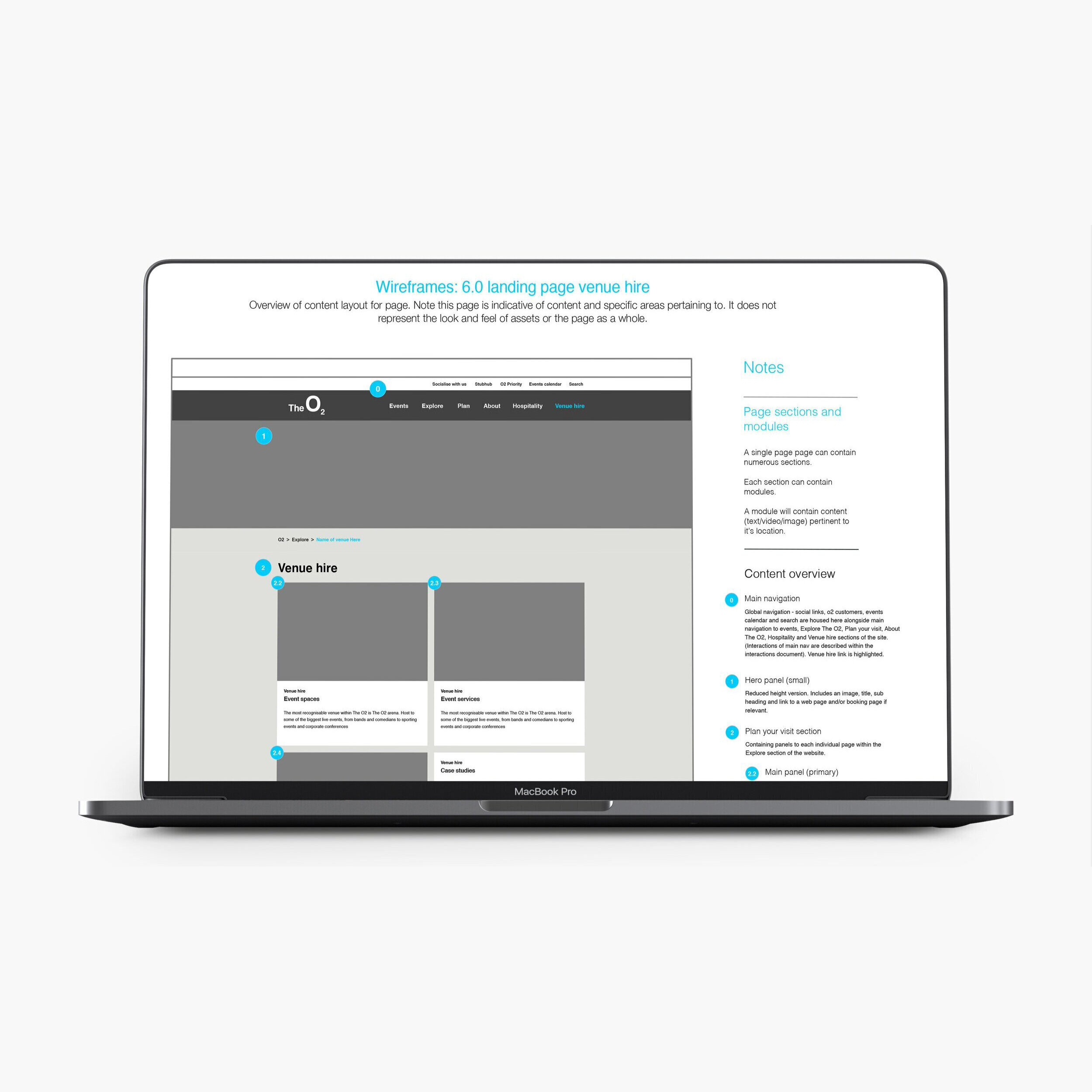
Online and offline began to speak the same language.Rebuilding the digital ecosystem The website became the core of this transformation. We redesigned it to integrate every offering seamlessly, making it effortless to move between concerts, sports events, cinema listings, restaurants, and leisure activities. Navigation was simplified. Content architecture was rationalised. The experience became exploratory rather than purely event-driven.
Underneath the surface, a comprehensive design system ensured consistency across campaigns, partnerships, and future activations. The platform was built to scale — capable of evolving as The O2 expanded its programme and experiences. What once felt like separate entities became one connected ecosystem.
The outcome
The result was more than a website refresh. It was a repositioning.
The O2 shifted from being perceived solely as a world-class music venue to being recognised as a complete entertainment destination. Visitor engagement increased as audiences explored beyond their original intent. The brand began to reflect the vibrancy and scale of the physical space itself.
The digital presence no longer advertised events. It invited discovery. And in doing so, it strengthened The O2’s position not just as a place to attend — but as a place to belong.
I led the strategic design direction and integration across brand and digital, ensuring the identity system translated seamlessly into experience. The project reinforced a powerful truth: when digital mirrors physical space thoughtfully, brand becomes architecture — and architecture becomes brand.