Designing connectivity without limits
OneWeb had a vision that went far beyond bandwidth. The ambition was to connect the entire world — from remote schools and rural clinics to global headquarters — with seamless, personalised connectivity. But the real challenge wasn’t launching satellites.
It was designing the business behind them. How do you build an organisation agile enough to serve every person, in every place, at the same time? How do you move from infrastructure provider to adaptive ecosystem?
Rethinking what a telco can be
We began by rejecting the traditional telco model. OneWeb couldn’t operate like a legacy carrier with rigid stacks and siloed services. It needed to become a magnet for innovation — a federated platform capable of uniting partners, systems, and services into a cohesive whole.
The strategy was clear: make it composable, make it contextual, make it personal.
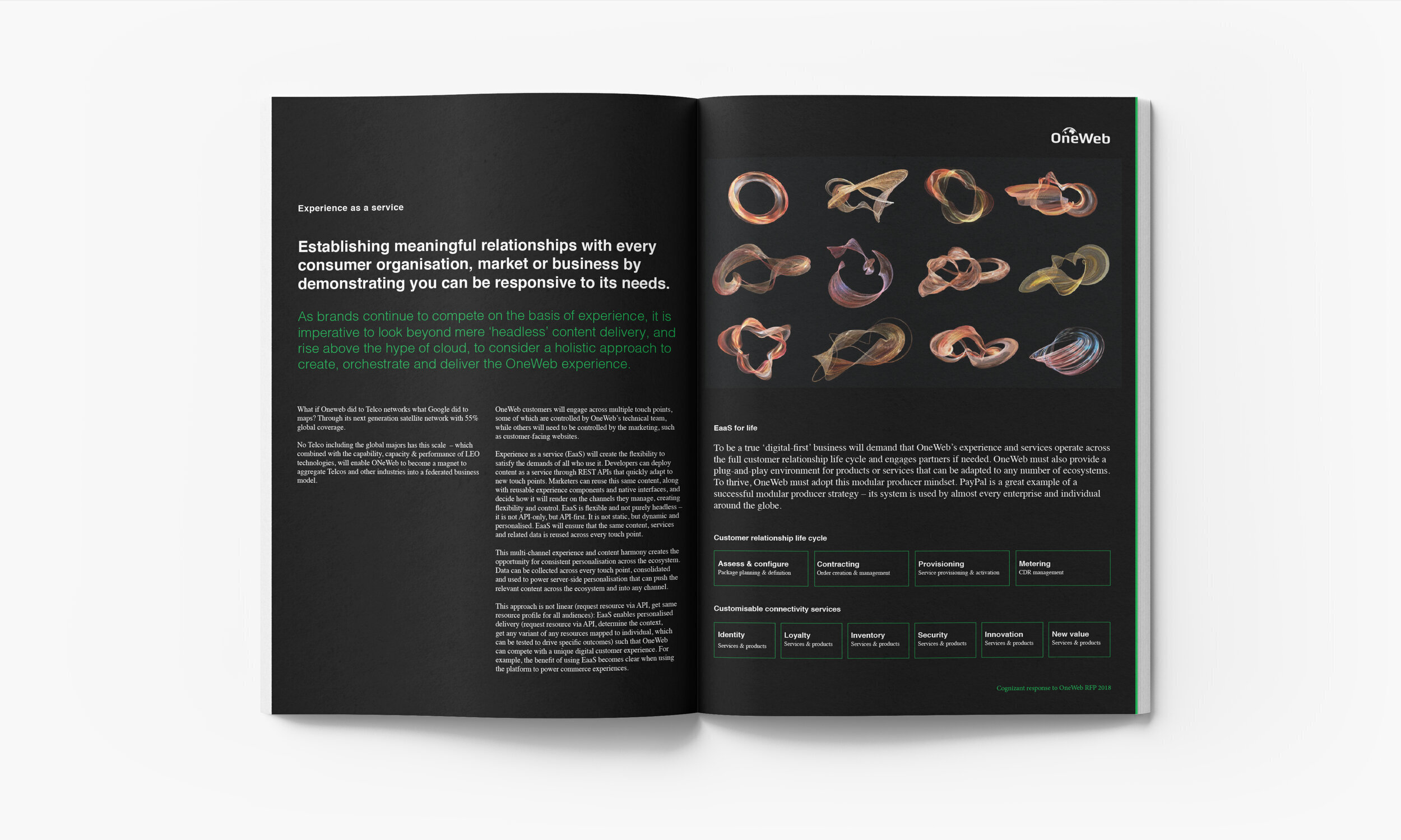
We designed a modular architecture built from self-contained components that could be assembled and reassembled depending on need. This composability allowed services to flex across markets without rebuilding the stack each time.
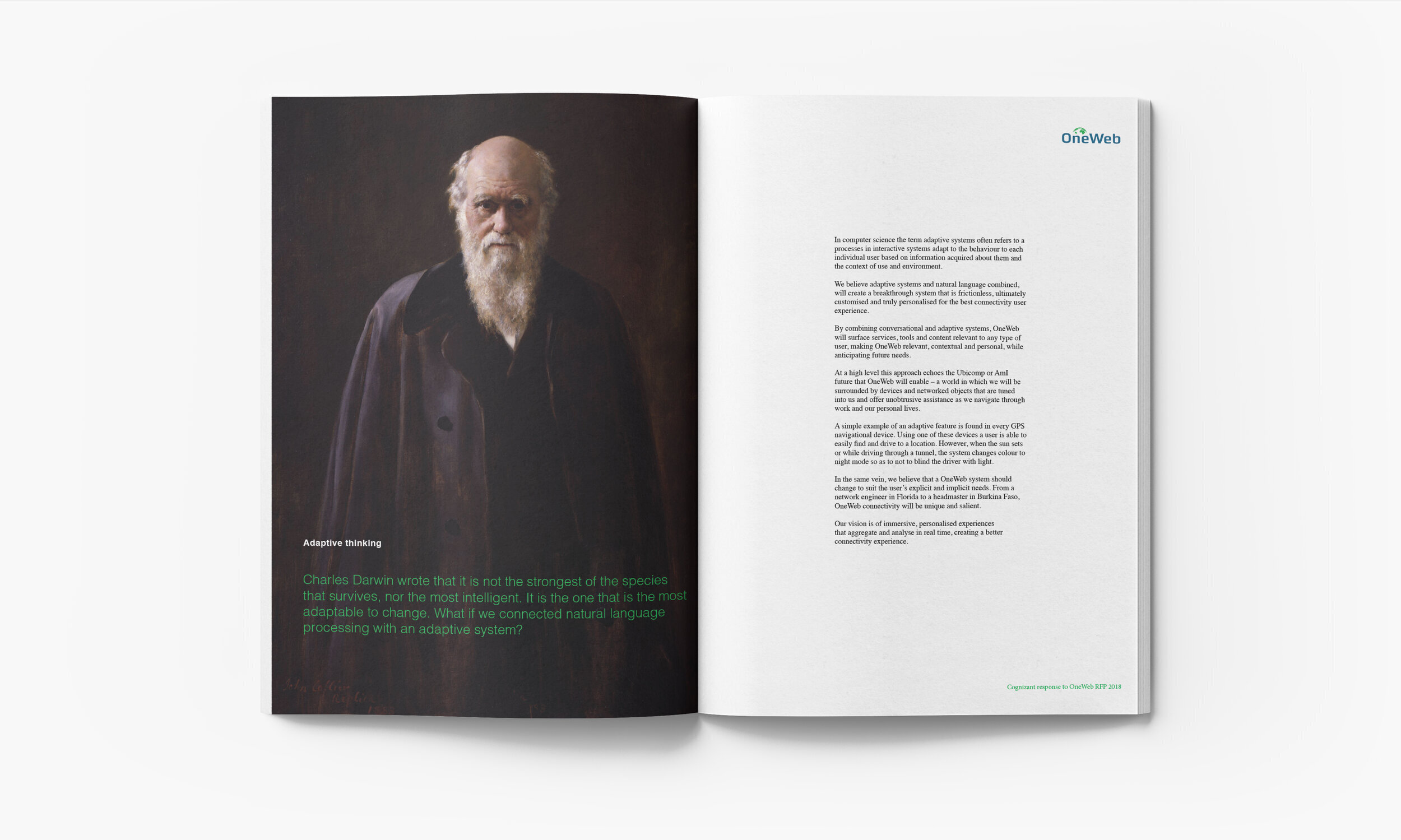
On top of that foundation, we layered an AI-powered personalisation engine capable of tailoring interfaces, content, and service configurations in real time. Connectivity was no longer static. It adapted to role, region, behaviour, and bandwidth constraints.
Experience-as-a-Service and Container-as-a-Service accelerated deployment cycles, enabling rapid experimentation and faster market entry. A unified design and content system ensured brand and experience consistency across every touchpoint — from enterprise dashboards to partner integrations.
Crucially, the platform was engineered for seamless integration with SDN, NFV, and next-generation satellite networks. It wasn’t built around legacy constraints. It was built for agility.
The outcome
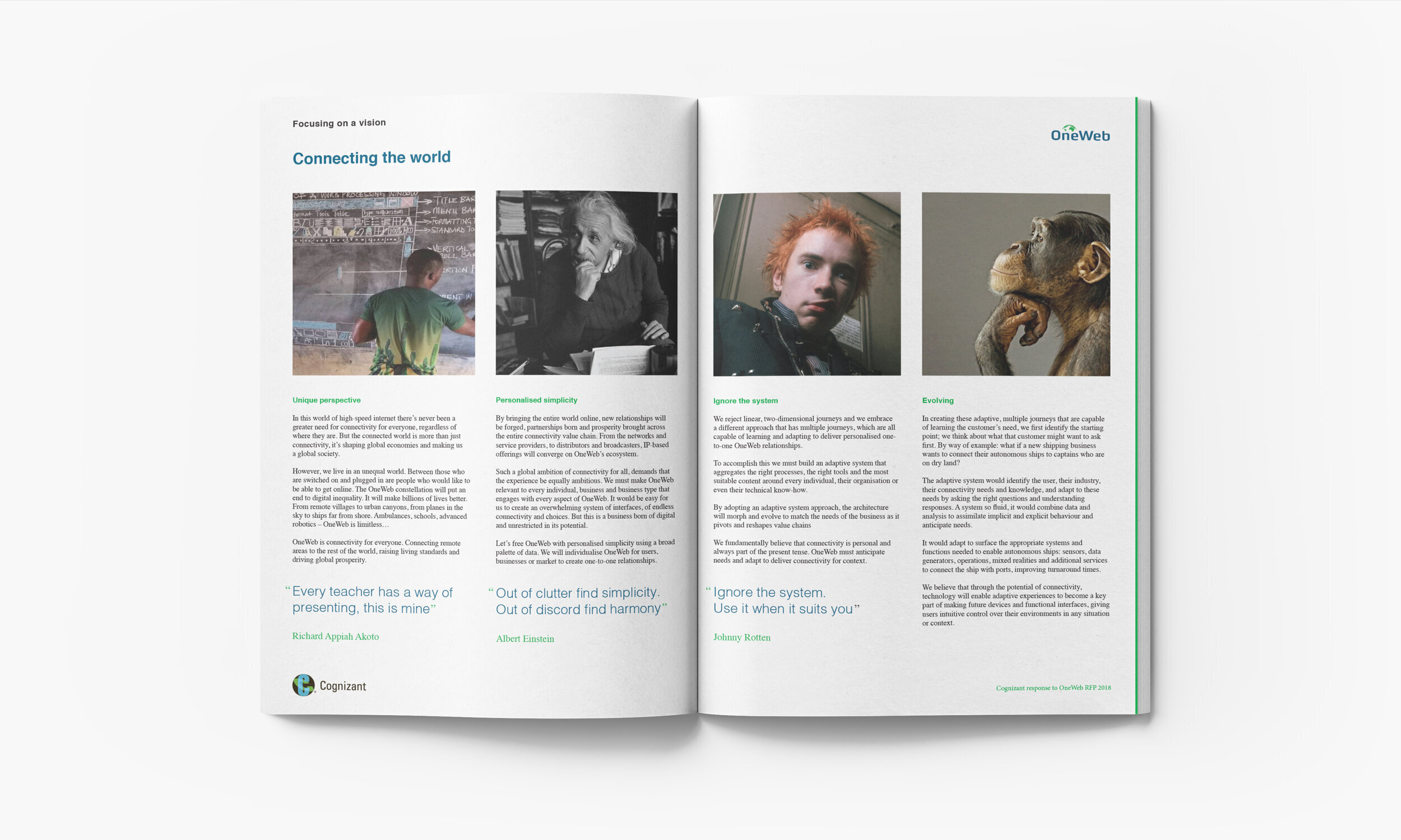
The result was a platform that could reconfigure itself around the user. A teacher in a remote region experienced something different from an enterprise CIO — yet both operated within the same unified ecosystem.
OneWeb achieved 55% global coverage with a fully modular technology stack capable of personalisation at global scale. Deployment cycles accelerated, doubling speed through containerised services and composable experience layers. The federated model attracted telco partners worldwide, positioning OneWeb not just as a satellite operator, but as a connectivity ecosystem.
What emerged was more than infrastructure. It was a blueprint for how modern connectivity businesses should operate — adaptive, intelligent, and partner-led.
My role
I led the experience strategy and systems architecture design, bridging ambition with operational reality. My focus was ensuring that composability wasn’t just technical — it was experiential. That personalisation wasn’t cosmetic — it was structural.
This wasn’t simply about connecting devices.It was about designing a business capable of understanding people — and evolving around them, without limits.