Redefining flexibility
The mobile industry moves fast. Devices evolve yearly. Expectations shift even faster. Yet most tariffs still lock customers into rigid, two-year commitments — tying them to yesterday’s technology in a category obsessed with what’s next.
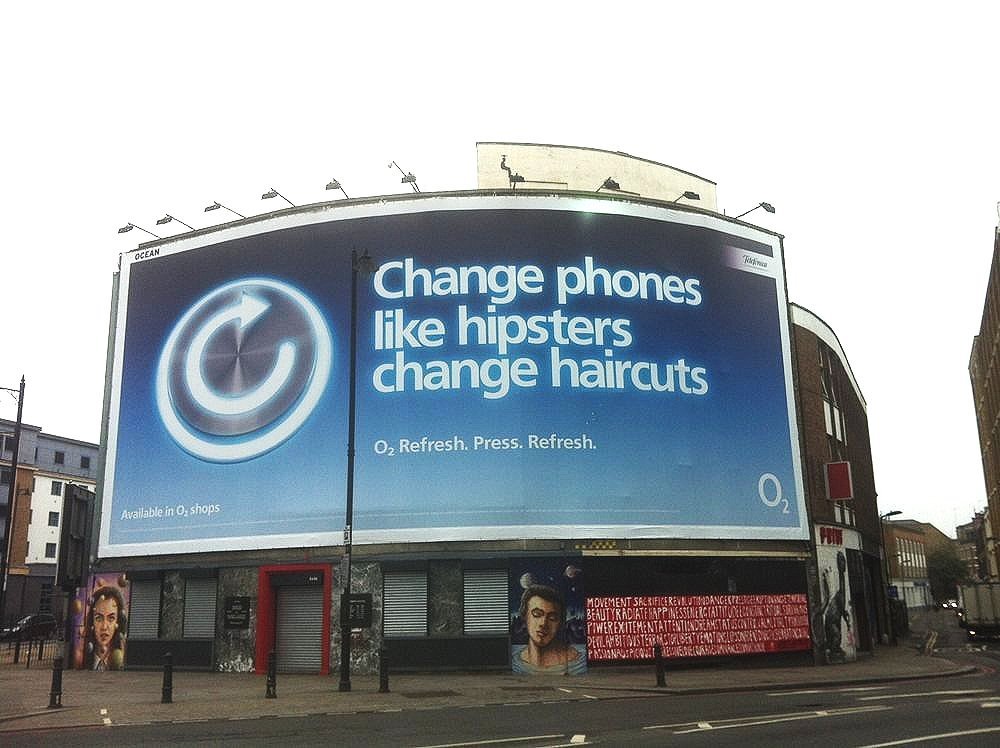
O2 was preparing to launch something different: Refresh. A tariff designed to give customers genuine flexibility — separating the cost of the handset from the airtime plan, and allowing upgrades without financial penalty. The ambition wasn’t just to launch a new product. It was to reframe what flexibility meant in telecoms.
The challenge: how do you communicate structural innovation in a category drowning in price-led advertising?
From tariff to cultural statement
We realised this wasn’t about features. It was about mindset. Phones change constantly. Why shouldn’t your plan. “Change phones as often as phones change” became more than a line — it became the organising idea. A simple, human truth that translated technical flexibility into everyday relevance.
Instead of explaining the tariff mechanics first, we dramatised the frustration of being stuck. Outdated phones. Missed moments. The feeling of being tied down while the world upgrades around you. Refresh wasn’t positioned as a discount. It was positioned as freedom.
Building a cohesive system
The campaign was designed as an ecosystem, not a burst. Across TV, digital, retail, and in-store touchpoints, we created a consistent narrative: control sits with the customer. Messaging, motion design, and product demonstrations reinforced the same core idea — upgrade when you’re ready, not when your contract tells you to.
Retail environments were adapted to reflect the new structure visually, separating device and airtime costs clearly to make the innovation tangible. Digital journeys were simplified to help customers understand how the flexibility worked in practice.
Complex pricing became transparent.
Rigid contracts became choice.
The outcome
Refresh didn’t just introduce a new tariff model — it repositioned O2 as a brand championing customer empowerment.
The campaign drove awareness of the new structure, increased upgrade intent, and strengthened perception of O2 as innovative in a crowded market. More importantly, it shifted the conversation from price comparison to control and flexibility.
In a category defined by lock-ins, O2 became the brand that unlocked.Because when technology never stands still, your plan shouldn’t either.