Engineering a feeling
You can feel a brand in the way a car drives. It’s in the precision of the steering. The confidence as it grips a corner. The smooth, controlled pull of acceleration. These moments aren’t just engineering outcomes — they’re emotional ones.
The question was deceptively simple: how do you translate that feeling into something measurable and repeatable across every Nissan vehicle — without making them all feel identical? This wasn’t about standardisation. It was about identity.
From brand values to road behaviour
We began at the source: the brand itself. Through deep workshops with brand, marketing, engineering, and design teams, we unpacked what truly makes a Nissan feel like a Nissan. Words surfaced — control, innovation, confidence, agility — but words alone don’t tune suspension systems or calibrate steering response. So we connected brand values directly to driving behaviours.
Steering became an expression of precision.
Braking became a signal of trust.
Acceleration embodied performance.
Smoothness conveyed intelligence.
Stability reinforced control.
Each attribute was defined not just philosophically, but mechanically. We created a shared language between brand teams and engineers — one that could travel from mood board to proving ground.
Making emotion measurable
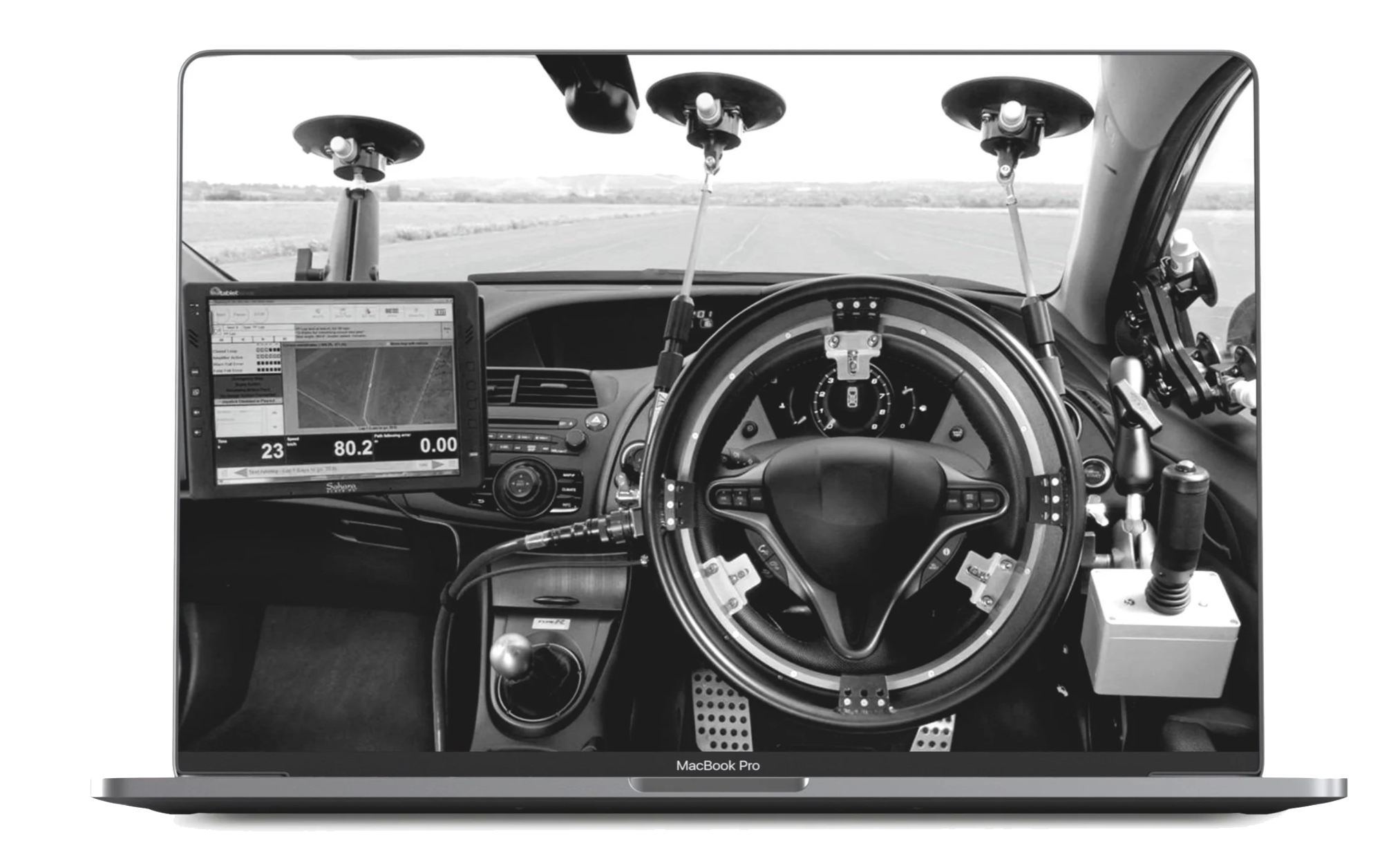
The next step was proof. Using AB Dynamics’ robotic drivers, we captured highly precise, repeatable performance data across controlled tests. In parallel, we incorporated Affectiva’s emotional AI to track human responses in real time. Side-by-side comparisons allowed us to fuse hard telemetry with lived experience. The goal wasn’t simply optimal performance. It was calibrated feeling.
If a steering adjustment improved lap metrics but reduced driver confidence, it wasn’t right. If braking distances were technically sound but didn’t feel reassuring, it wasn’t aligned. Emotion became a performance variable — not an afterthought.
Through iterative testing and refinement, we shaped a balance between machine precision and human intuition.
The outcome
The result was Nissan’s Driving DNA Map — a living framework that links brand essence to measurable, tunable driving attributes. It provides engineers with clear guardrails while preserving creative space across vehicle categories.Compact city car or performance SUV, the experience remains recognisable. Not identical — but unmistakably Nissan.
The framework now informs development decisions across future models and markets. It evolves as expectations evolve, ensuring the brand scales without dilution.
Why it matters
Automotive brands often drift over time as platforms diversify and teams scale. The Driving DNA Map prevents that drift. It embeds brand identity directly into engineering decisions, turning abstract positioning into operational clarity.
Recognition becomes intentional. Consistency becomes designed.
My role
I led the design of the research methodology and guided integration across multidisciplinary teams — ensuring brand, data science, and engineering operated as one system rather than parallel tracks. This project reinforced something I’ve learned repeatedly: the most powerful innovation happens at the intersection of intuition and evidence. Art and science aren’t opposites. They’re partners.