Enablement to intelligence
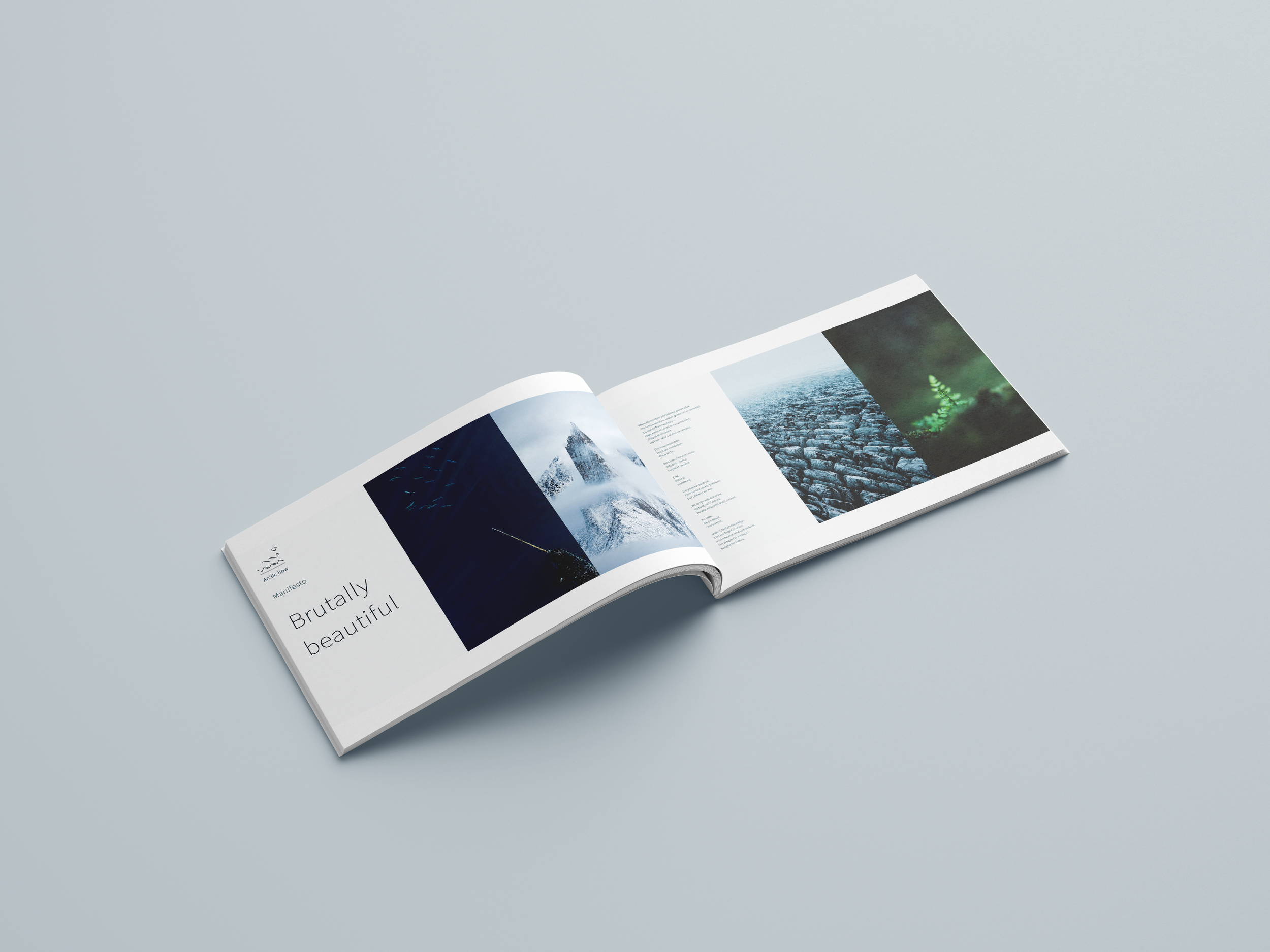
Highspot had already established itself as a leader in revenue enablement. But the landscape was shifting fast. AI wasn’t a feature anymore — it was becoming the operating model.The opportunity wasn’t to bolt AI onto the platform.It was to redesign Highspot around agentic intelligence from the inside out.The ambition was bold: evolve the product into a system of proactive, autonomous agents — while simultaneously unifying the entire experience under a next-generation design system, Arctic Flow.
Starting with behaviour, not technology
Before designing agents, we examined how revenue teams actually work. Through research across GTM roles — sellers, marketers, enablement leaders, operations — we mapped friction points in daily workflows. Repetitive admin. Context switching. Searching for the right content. Preparing for meetings under time pressure. Post-call follow-ups eating into selling time.The insight was clear: users didn’t need more dashboards. They needed intelligent assistance embedded directly into their flow of work.
Agentic AI became the mechanism.Arctic Flow became the experience layer that made it usable, trustworthy, and scalable.
Designing Arctic Flow
Arctic Flow wasn’t a visual refresh. It was a structural reset. The existing platform had grown organically over time. Patterns varied. Interactions lacked cohesion. As AI capabilities expanded, the need for clarity, hierarchy, and consistency became urgent.
Arctic Flow introduced:
A unified interaction model across every surface
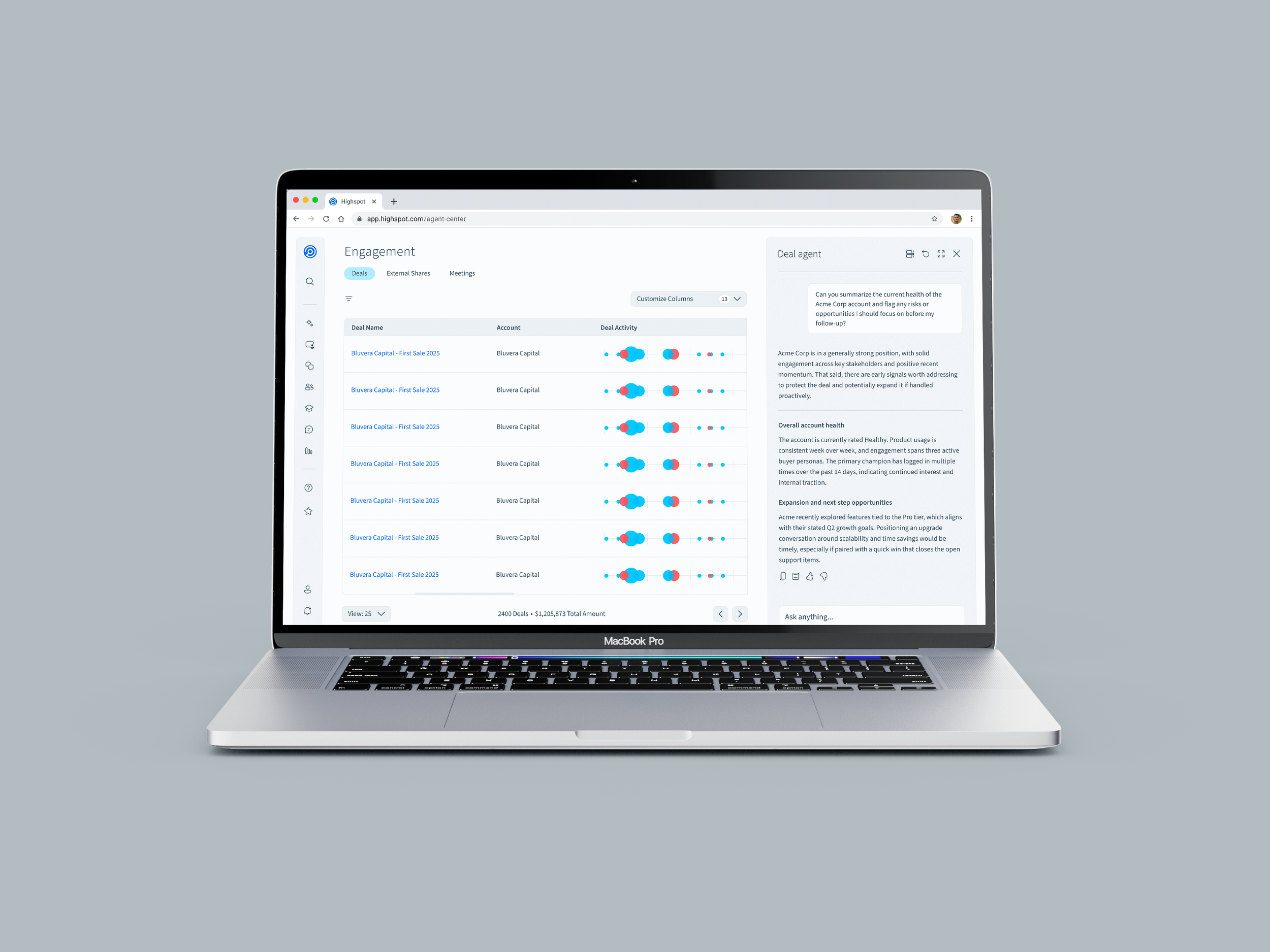
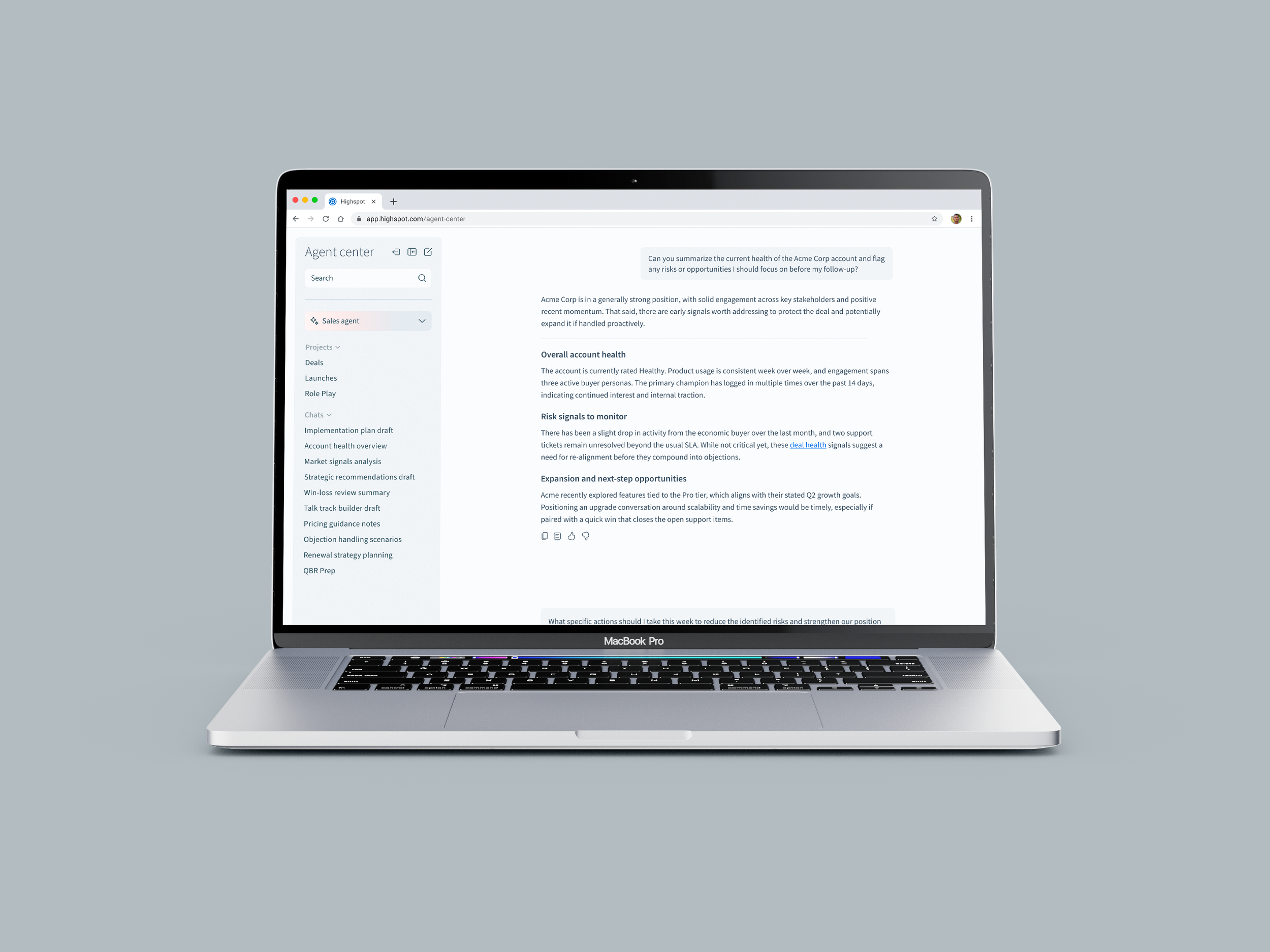
Clear system states for AI-driven activity (thinking, suggesting, acting)
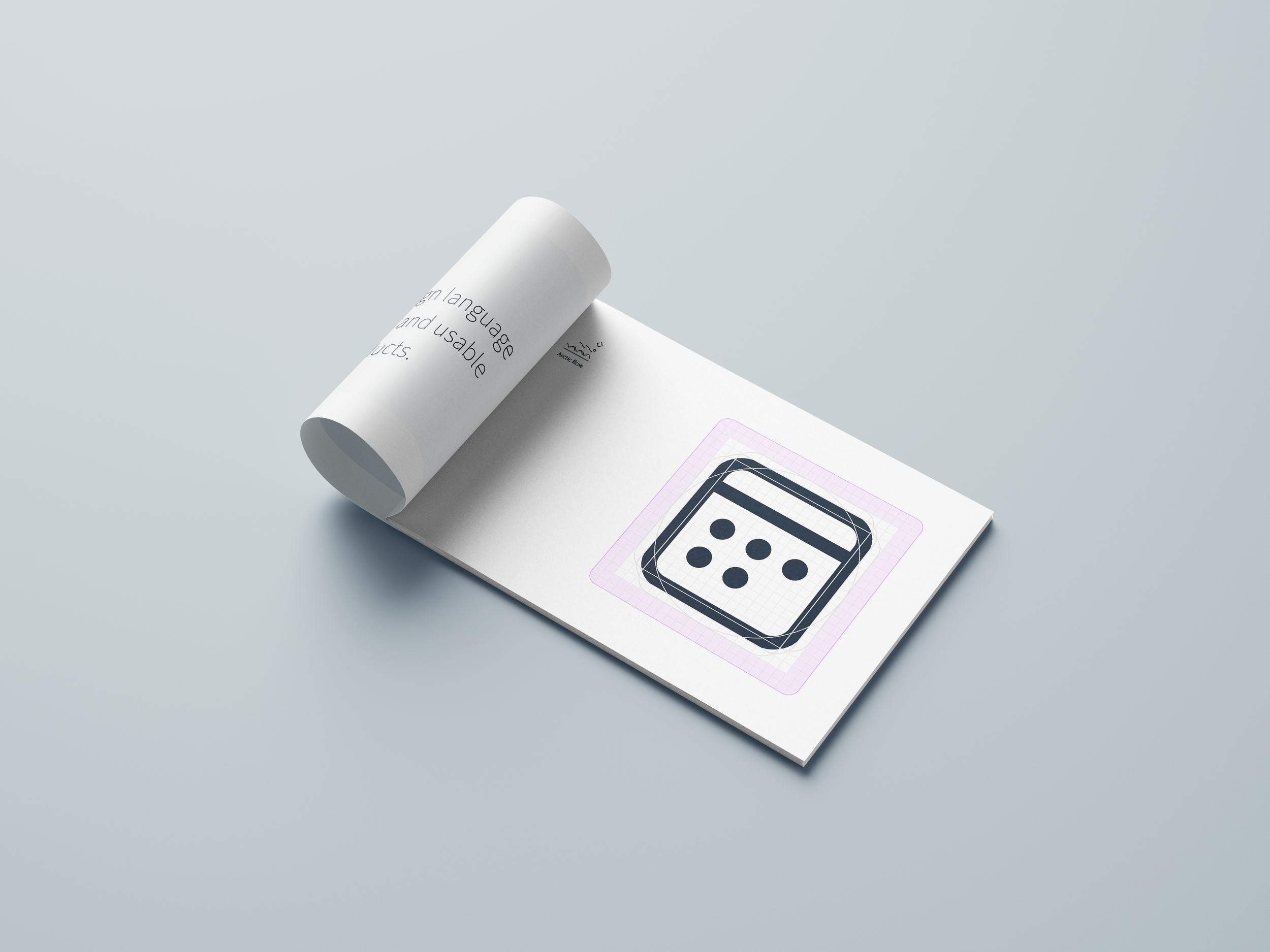
A modular component architecture built for scale
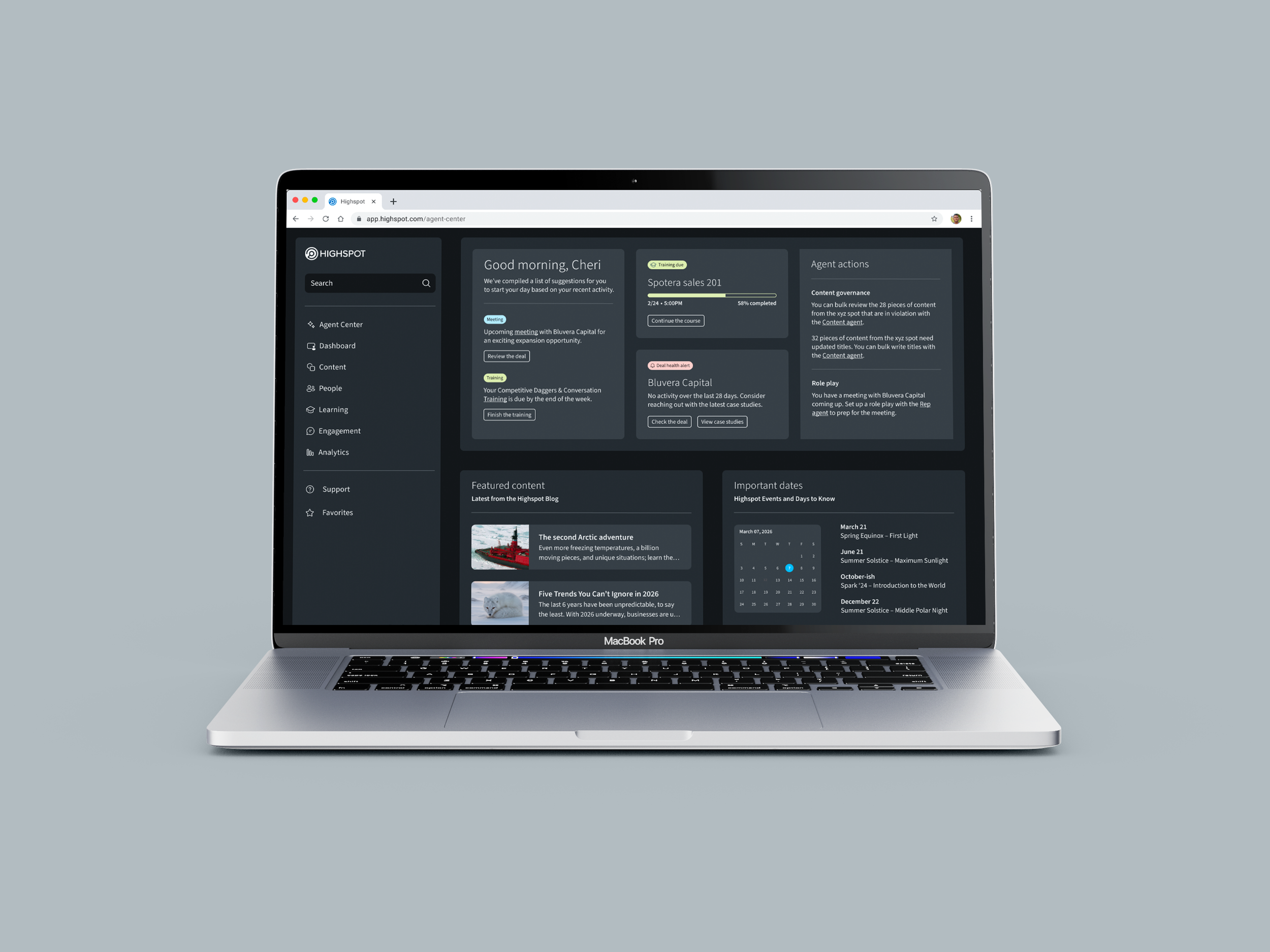
Simplified navigation and reduced cognitive load
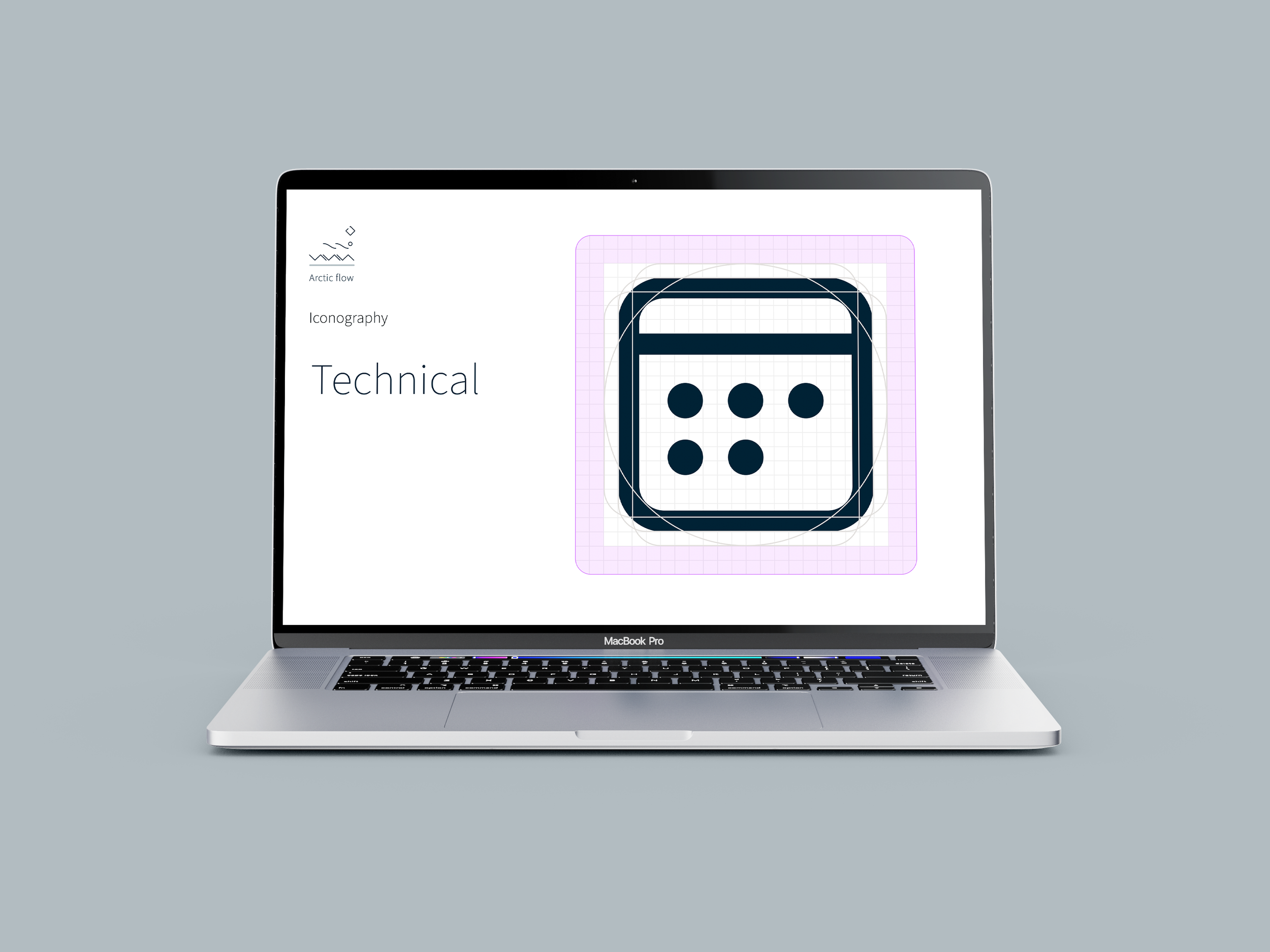
A refined visual language grounded in clarity, motion, and depth
The system introduced fluid transitions, layered surfaces, and contextual panels that allowed agents to appear naturally within workflows — not as interruptions, but as collaborators. Flow became the organising principle. Not screens. Not pages. Movement.
Introducing agentic agents
With the system foundation in place, we embedded agentic intelligence across the product.Instead of reactive prompts, agents were designed to anticipate intent.Each agent was designed around three principles:
•Proactive, not passive.
•Context-aware, not generic.
•Transparent, not mysterious.
Trust was critical. Arctic Flow introduced clear visual cues distinguishing user action from agent action. Suggestions were editable. Decisions were explainable. Automation never removed control.
Making complexity feel simple
One of the greatest risks of embedding AI deeply is overwhelming users. Arctic Flow addressed this by introducing progressive disclosure. Agents surface when relevant and recede when not. Motion and hierarchy guide attention without demanding it. Data visualisation became clearer, cleaner, and more purposeful.
Behind the scenes, we rationalised multiple legacy patterns and design systems into a single scalable foundation. This reduced engineering overhead, accelerated feature development, and ensured consistency across global teams.
The outcome
The redesign repositioned Highspot from a content and enablement platform to an intelligent revenue partner.
Internally, the unified Arctic Flow system accelerated development cycles and reduced fragmentation across product surfaces. Agentic features drove stronger engagement and differentiated Highspot clearly in an increasingly AI-saturated market.More importantly, the platform shifted from reactive toolset to proactive system.
Why it matters
Many platforms are adding AI. Few are redesigning around it. By pairing agentic intelligence with a cohesive design system, Highspot didn’t just modernise its interface — it evolved its operating model. AI wasn’t layered on. It was woven in.